
Meteorite · Museum · Songwe · Tanzania
Eighty thousand years ago, something fell from the sky and landed on a hill in what is now the Songwe Region. It has been sitting there ever since.
The Mbozi Meteorite is the fourth-heaviest meteorite in the world and the second-heaviest in Africa, after the Hoba Meteorite in Namibia. It weighs 25 metric tons, measures 3.3 meters long, and is made almost entirely of iron, with around 8% nickel and trace amounts of phosphorus. It does not belong to any known category of iron meteorite, which means scientists still cannot fully account for its origin.
The Nyiha people who lived around Marengi Hill knew about it long before any formal record existed. A blacksmith named Halele is said to have been among the first to take particular notice of it. The official scientific documentation began in 1930, when a surveyor named William Nott recorded it. That gap between local knowledge and written record is a pattern you will find across many of Tanzania's most significant sites.
When Nott arrived, only the top of the meteorite was visible above the hillside. The surrounding earth was excavated to expose the full object, leaving it balanced on a column of undisturbed soil that was later reinforced with concrete. The result is one of the stranger sights in Tanzania: a 25-ton iron rock perched on a pedestal on a quiet hill, with a viewing platform built around it and the southern highlands stretching out in every direction.
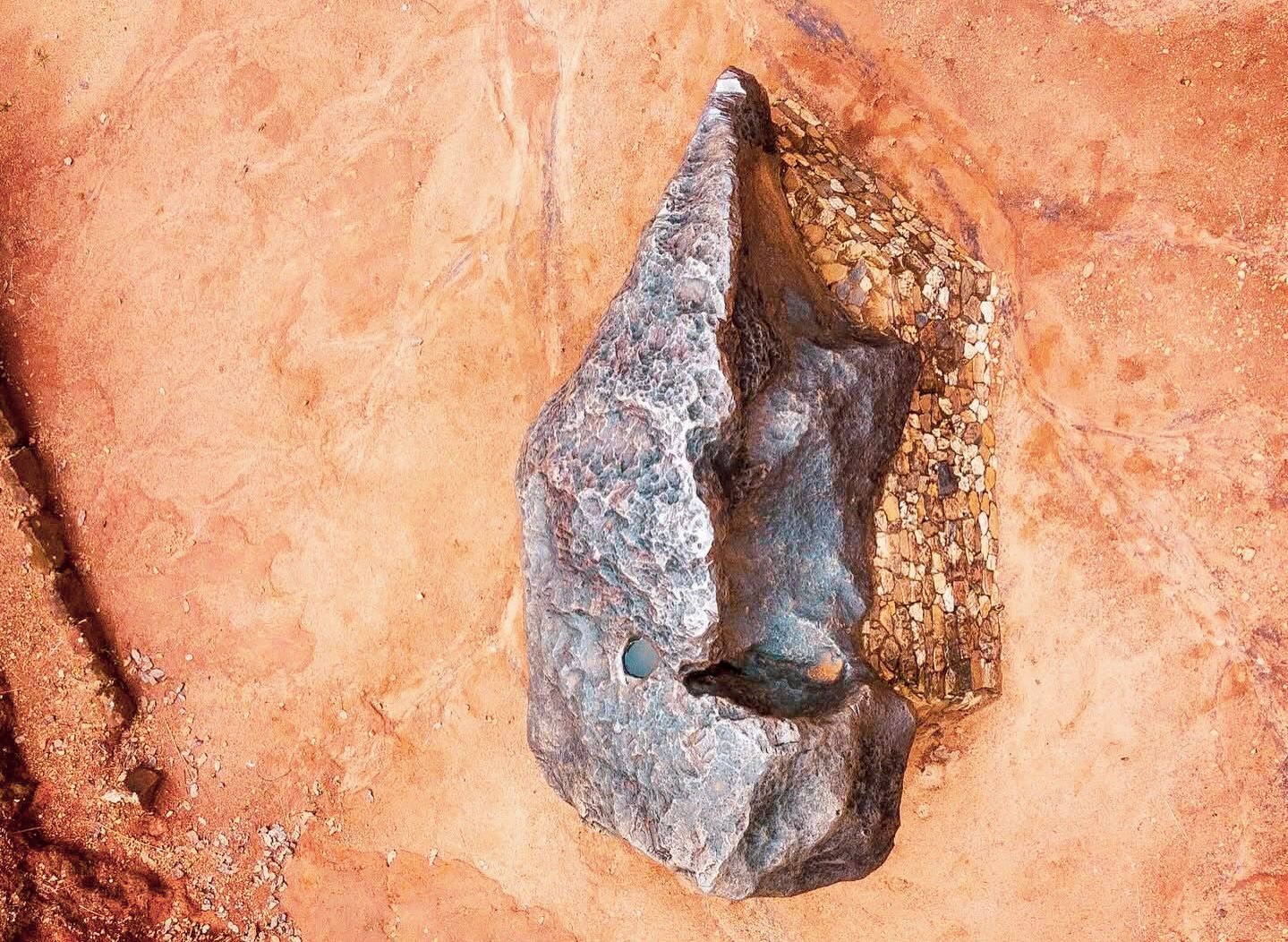
The meteorite is now under the administration of the Ngorongoro Conservation Area Authority. There is a small entry fee to access the site. It is not a dramatic experience in the conventional sense. No sound, no movement, no wildlife. Just an enormous piece of extraterrestrial metal on a hillside, older than anything else you are likely to encounter in this country. That tends to make people quiet.
From Mbeya, the drive takes about an hour by private car. Head south on the Tanzam Highway toward Vwawa or Mlowo, then turn toward Ndolezi village. The turnoff is signposted from the main road. The meteorite is about 12 kilometers from the junction. If you used public transport, you may choose to walk, take a bodaboda, bajaj, or hire a taxi from the main road to the museum.